Choosing the right countertop is one of the biggest decisions you'll make during a kitchen or bathroom remodel. Two of the most popular options—quartz and granite—offer exceptional durability and timeless beauty, but they aren't identical. The best choice depends on your lifestyle, maintenance preferences, cooking habits, and design goals.
At NorCal Premier Renovations, we've helped homeowners choose countertops that not only look beautiful but also perform well for years. Here's an honest comparison of quartz and granite to help you make the right decision.
Quartz and Granite: What's the Difference?
Although both are premium countertop materials, they're made differently.
Quartz is an engineered surface made primarily from natural quartz minerals combined with resins and pigments. This manufacturing process creates a non-porous surface with consistent colors and patterns.
Granite is a natural stone quarried directly from the earth. Every slab is unique, with its own mineral patterns, movement, and color variations.
Neither material is "better" in every situation—they simply have different strengths.
Appearance
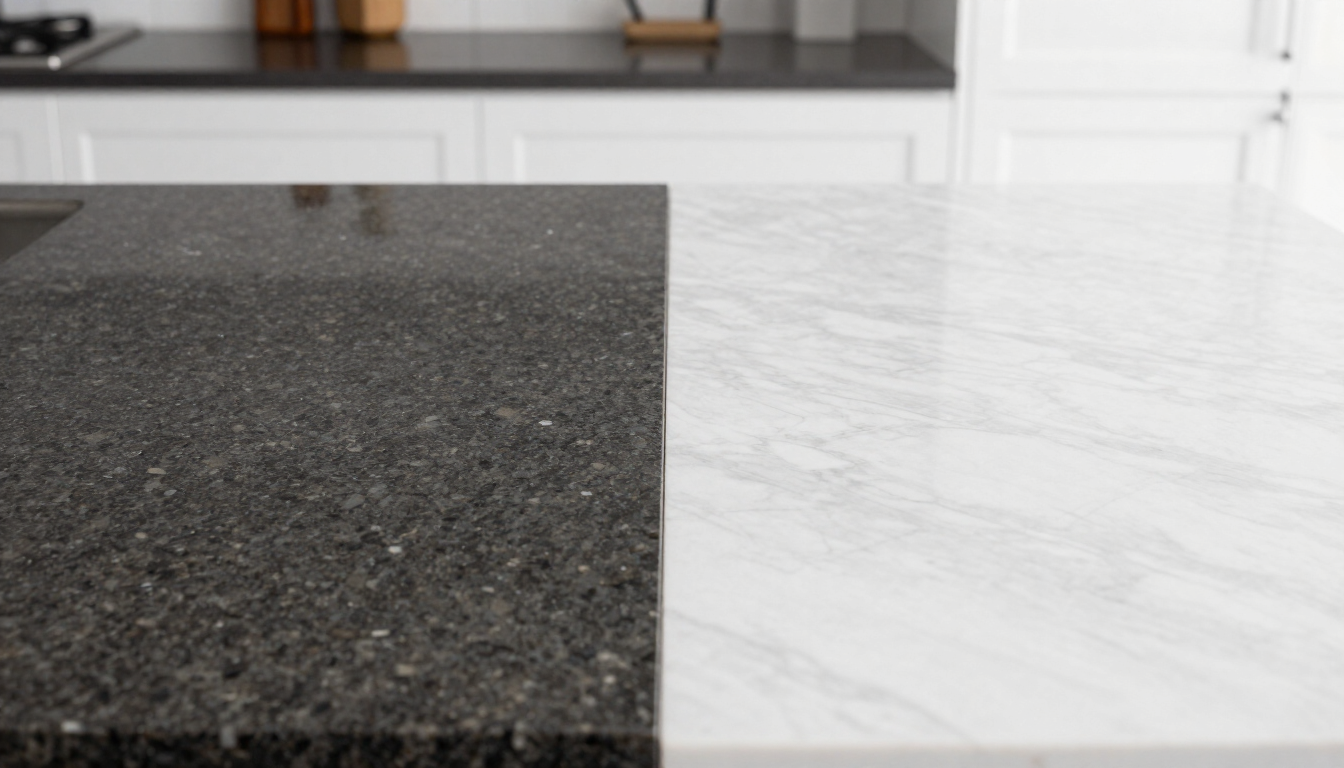
If you appreciate natural character, granite offers one-of-a-kind beauty. No two slabs are exactly alike, making every installation unique. Quartz provides a more uniform appearance and is available in a wide range of colors and designs, including styles that resemble marble or natural stone.
Choose Granite If You Want:
<li>Natural variation</li><li>Unique veining</li><li>Organic beauty</li>
Choose Quartz If You Want:
<li>Consistent patterns</li><li>Modern designs</li><li>A clean, contemporary appearance</li>
Durability
Both quartz and granite are extremely durable and perform well in busy homes. Granite is a natural stone that resists scratches and high temperatures very well. Quartz is also highly scratch-resistant and performs exceptionally in everyday use, although neither material is completely chip-proof. Heavy impacts, especially along exposed edges, can damage either surface.
Heat Resistance
This is one area where granite has an advantage. Because granite is natural stone, it tolerates heat better than quartz. Quartz contains resins that can be damaged or discolor when exposed to excessive heat, so using trivets or hot pads is recommended for hot cookware. Granite is more forgiving, but using trivets is still a good habit to protect any countertop.
Stain Resistance and Maintenance
Quartz is non-porous, meaning it doesn't require sealing and resists common household stains such as coffee, wine, cooking oils, and juice when cleaned promptly.
Granite is naturally porous. To maintain its stain resistance, it should be sealed periodically according to the manufacturer's recommendations. Once properly sealed, granite is also easy to maintain, but it does require a little more attention over time.
Cleaning
Both surfaces are easy to clean with mild soap and water. Avoid abrasive cleaners, bleach, or harsh chemicals, as they can damage the finish or sealer. Simple daily cleaning is usually all that's needed to keep either countertop looking its best.
Cost
Quartz and granite are both considered premium countertop materials. Pricing varies based on material selection, thickness, edge profile, fabrication complexity, installation requirements, and local availability. In many projects, the installed cost of quartz and granite overlaps, so maintenance preferences and appearance are often more important than price alone.
Which Countertop Adds More Value?
Both quartz and granite are highly desirable features in today's homes. A professionally installed countertop made from either material can improve the appearance of your kitchen or bathroom and contribute to overall home appeal. The quality of the installation and the overall design usually have a greater impact than choosing one material over the other.
Which One Is Right for You?
Quartz May Be Better If You:
<li>Want little to no maintenance</li><li>Prefer consistent colors and patterns</li><li>Have a busy household</li><li>Want maximum stain resistance</li>
Granite May Be Better If You:
<li>Love the beauty of natural stone</li><li>Frequently cook with hot cookware</li><li>Appreciate one-of-a-kind slabs</li><li>Don't mind periodic sealing</li>
Our Recommendation
Homeowners often ask us which countertop we would install in our own homes. The answer is: it depends on how you use your kitchen.
If low maintenance is your highest priority, quartz is hard to beat. It offers outstanding durability, excellent stain resistance, and requires no sealing.
If you value natural beauty and superior heat resistance, granite remains an outstanding choice that has been trusted in homes for decades.
The good news is that there isn't a wrong decision. Both materials can provide decades of beauty and performance when professionally installed and properly cared for.
Frequently Asked Questions
<h3>Does quartz scratch easily?</h3><p>No. Quartz is highly scratch-resistant, but using a cutting board is still recommended to protect both the countertop and your knives.</p><h3>Does granite need to be sealed?</h3><p>Yes. Most granite countertops benefit from periodic sealing to help resist stains and moisture.</p><h3>Which countertop is better for families?</h3><p>Quartz is often preferred by busy families because it requires very little maintenance and is highly resistant to everyday spills.</p><h3>Can I put hot pans on quartz?</h3><p>It's best not to. Although quartz is durable, excessive heat can damage the resin that binds the material together. Always use a trivet or hot pad.</p><h3>Which lasts longer?</h3><p>With proper care, both quartz and granite can last for decades.</p>